
Lufthansa strike April 10: cabin crew halt operations at key hubs
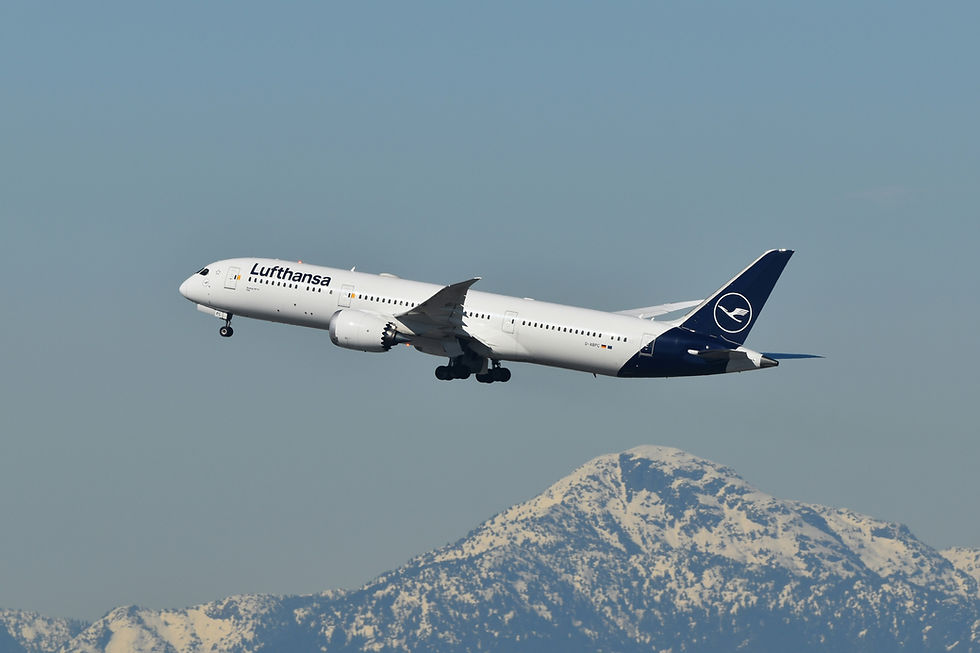
Lufthansa enters a new operational disruption right in the midst of the peak traffic period after the Easter holidays. Cabin crew at Lufthansa and CityLine have announced a strike for Friday, April 10, affecting flights from Frankfurt, Munich and several other German airports.
Although the unions have deliberately avoided the Easter week itself to reduce pressure on passengers, the timing still comes at a sensitive time for the entire sector.
Reason for Lufthansa strike: negotiations without progress
The unions openly point out that the decision to strike is the result of months of negotiations about the new collective agreement that did not bring concrete results.
According to their statements, Lufthansa has not yet presented even a basic contract proposal, which further strains relations.
This situation is not uncommon in the industry, but the problem arises when negotiations spill over into the operational segment.
For carrier, this means a direct hit to the network, while for partners – from agencies to corporate clients – it means increased uncertainty and the need for quick adjustments.
Operational impact on network and partners
And if Lufthansa announces that it will try to maintain as many flights as possible through the capacities of the group and partner airlines, it is realistic to expect cancellations and delays, especially on routes that rely on main hubs.
For markets in the region, where the Lufthansa Group plays a significant role in connecting with the rest of the world, this means a chain reaction.
Itineraries with transfers via Germany are particularly at risk, and TMCs and agencies will face an increased number of changes in a short time.
Passenger rights and operational reality
Standard options are available to passengers affected by the strike: flight change or refund via digital channels. However, in practice, the biggest challenge remains the availability of alternative capacities.
According to EU regulations, the carrier is obliged to provide alternative transport – including options with competing companies.
As a rule, Lufthansa automatically redirects passengers, and on domestic routes it also uses integration with rail traffic.
If such an alternative is not offered in time, passengers can organize the trip themselves and subsequently request a refund.
This is where agencies take on a key role, as quick response often means the difference between a controlled cost and complete operational chaos.

Compensations and additional costs
In addition to logistics, the strike also raises the issue of costs. Carriers are obliged to cover basic care - meals, drinks and, if necessary, accommodation. In the case of package tours, the responsibility shifts to the tour operator, which further burdens the operational teams.
The issue of compensation is also important. EU case law clearly shows that a strike by one's own staff does not fall under extraordinary circumstances. This means that passengers may be entitled to compensation of between 250 and 600 euros, depending on the length of the flight and the delay in arrival.
This represents an additional financial burden for carriers., while for agencies it increases the need for precise information of clients and management of expectations.
Throughout his career, he gained rich experience working in different segments of the tourism industry, including airlines, the hotel sector, travel tech companies, and agency and tour operator systems.
He participated in the development of sales channels, optimization of distribution and implementation of technological solutions that improve business in tourism.
It places a special focus on connecting the operational and technological aspects of the industry.
As the founder of Tragento.com, he is focused on connecting key stakeholders in the tourism industry and educating the market on trends in Traveltech, the aviation industry, legislation and digital distribution.