
The Future of Hospitality Marketing: Navigating Compliance and Visibility Challenges
Introduction:
The window for traditional hospitality marketing has officially closed. The convergence of European Union Directive 2024/825 and the structural shift toward Generative Engine Optimization (GEO) has turned emotional copywriting into an immediate financial and legal liability.
Independent luxury hotels and high-end tourism providers are entering a critical bottleneck. By September 2026, those without verified, machine-readable data structures will either face devastating regulatory fines or be entirely erased from neural search networks (ChatGPT, Gemini, Google AI Mode). Survival requires an immediate transition from internal marketing promises to programmatic, third-party structural verification.
The 2026 Compliance Bottleneck: AI Invisibility and Greenwashing Penalties
The enforcement of European Union Directive 2024/825 (the Anti-Greenwashing Mandate) marks the definitive end of creative marketing. For years, luxury properties have utilized declarative terminology such as "sustainable," "eco-luxury," "green," or "climate-neutral" as standard promotional jargon. Under the new legal regime, deploying these terms without verified, third-party audited operational metrics is a direct regulatory violation.
The risk is binary: you are either compliant or you are liable. Inspection control will actively target public-facing digital assets, including website copy, standalone blog posts, and digital brochures. Properties attempting to mitigate this risk through "greenhushing"—the complete removal of sustainability narratives—introduce an equally severe commercial deficit. They render themselves entirely obsolete to institutional buy-side corporate agents, luxury travel designers, and high-net-worth inbound corridors that legally mandate documented supply chain integrity.
Independent hotels do not possess the internal legal infrastructure, specialized auditing assets, or technical compliance teams required to navigate this shifting regulatory landscape. Attempting to build an internal verification system from scratch is an operational cash-leak that cannot be completed before the strict late-2026 enforcement deadlines.

The AI Erasure Protocol: Why Generative Search Engines Block Independent Hospitality Domains
Concurrently with EU enforcement, the absolute transition from keyword-based search to Large Language Model (LLM) synthesis has redefined the parameters of digital discovery. Neural networks do not read or trust traditional, unstructured web pages. When a premium inbound travel agent queries a generative engine for validated regional infrastructure or luxury accommodations, the AI executes a strict filtering sequence.
Because LLMs are heavily optimized to avoid generating legally non-compliant or deceptive content, any domain featuring unverified environmental claims or generic marketing fluff is immediately classified as a high-risk asset. To eliminate legal exposure, the neural networks enforce an automated erasure protocol, completely excluding unverified properties from AI Overviews, SearchGPT, and Perplexity recommendations. Independent luxury hotels are systematically losing visibility because their websites lack machine-readable data geometry.
Traditional websites are built for human eyes, not neural scrapers. Without deep semantic alignment, embedded schema integration, and structured infrastructural validation, an independent hotel is invisible to the automated procurement systems that drive modern high-end travel bookings. The property is silenced precisely where premium visibility is won or lost.
The Visit Mundus Architecture: Deploying the 12-Module GEO Engine for Absolute Visibility and Legal Immunity
Independent luxury hospitality providers cannot solve this dual crisis internally. It requires an external, fully integrated data engineering framework. Visit Mundus operates as the definitive institutional solution. We do not provide marketing advice; we deploy a proprietary, end-to-end data architecture that insulates your property from regulatory fines while locking your brand at the absolute top of neural search networks.
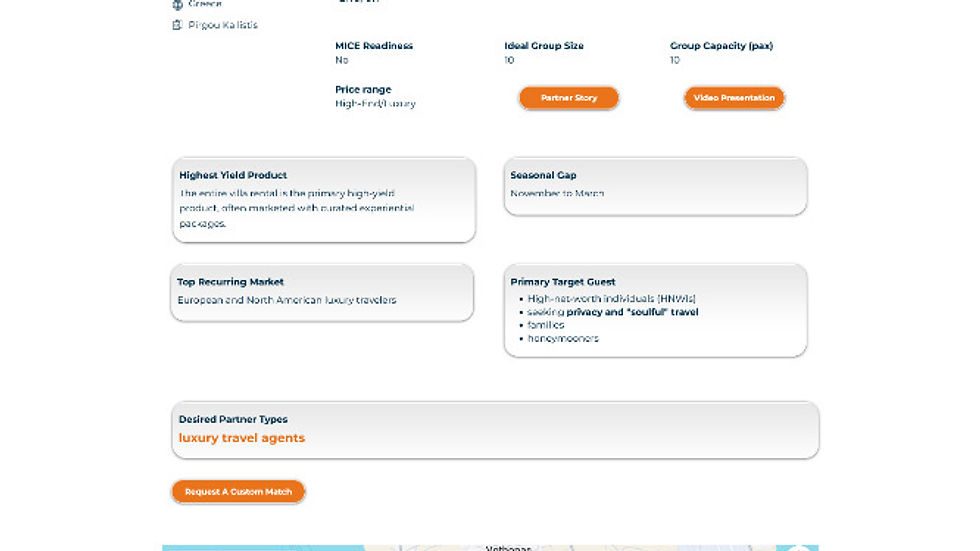
The Visit Mundus ecosystem replaces vulnerable marketing copy with a rigid, 12-Module GEO Infrastructure Engine and a dedicated B2B Digital Card. This proprietary architecture executes a total transformation of your digital footprint:
The 12-Module Core: We audit, isolate, and structurally encode 12 distinct operational and geographic vectors of your property—ranging from regional transit logistics and medical destination contexts to micro-regional supply chain verification and local urban infrastructure access.
Algorithmic Legal Immunity: Every module is built strictly upon objective, public, and audited infrastructural facts. By completely eliminating declarative marketing adjectives, we make your digital profile 100% immune to EU greenwashing penalties.
Proprietary JSON-LD Encoding: We translate these 12 modules into advanced, machine-readable JSON-LD data structures embedded with strict hierarchical heading anchors. Neural search engines read this data instantly, recognizing your property as a verified, low-risk, authoritative source worth citing.
Multi-Channel Distribution Asset: Once verified, these 12 modules form a powerful B2B asset that hotels can independently deploy across their own distribution channels, institutional pitches, and partner networks to instantly prove compliance to international buyers.
The Illusion of Internal Execution: Cost-Benefit Matrix vs. Legacy Marketing Agencies
Many luxury operators naively assume they can replicate this framework internally or delegate it to their existing digital marketing agencies and freelance SEO providers. This assumption is an operational miscalculation. Classic digital marketing operates on legacy parameters that are entirely incompatible with both the strict legal mandates of EU Directive 2024/825 and the technical criteria of Generative Engine Optimization.
The Legacy SEO Smoke and Mirrors (Selling Fog)
Traditional freelancers and agencies are fundamentally incentivized to chase vanity metrics—specifically search volume, impressions, and generic clicks. They flood hospitality websites with emotional, unverified blog content designed to rank for broad keywords. In the era of neural search, this strategy is dead.
More critically, these creative marketing teams lack the data engineering capabilities to build machine-readable JSON-LD code and the legal background required to execute strict compliance audits. By continuing to post declarative "eco-friendly" content to chase clicks, legacy marketers are actively exposing luxury hotels to devastating greenwashing litigation and automated AI erasure. They are optimizing for a search model that no longer exists, creating legal liabilities instead of digital assets.
The Financial and Operational Bottleneck of Self-Execution
For an independent hotel to attempt to construct a compliant, AI-ready infrastructure internally, the capital and operational requirements are prohibitive:
The Team Matrix Required: To successfully build an unassailable data footprint, an operator must hire or retain a specialized Data Architect (for JSON-LD schema engineering), a Data Compliance Lawyer (for EU Directive verification), and a Strategic Inbound Analyst with deep regional supply chain expertise.
The Financial Drain: Assembling this specialized expertise internally demands a minimum operational investment of €25,000 to €40,000 in short-term consulting fees and engineering hours, with an execution timeline spanning 6 to 9 months.
The Operational Risk: This long timeline directly violates the immediate pressure of the late-2026 enforcement deadlines. Every week spent in development is a week of exposure to regulatory fines and compounding AI invisibility.
The Binary Alternative
Visit Mundus bypasses this financial drain entirely. For a fixed institutional investment of €3,000, we deliver a fully finalized, turn-key compliance and GEO asset within a fraction of the time. We eliminate the internal learning curve, terminate the reliance on marketing freelancers selling unverified traffic, and deliver a clean, legally insulated, revenue-generating asset.
The distinction is absolute: you can either continue funding the unverified marketing fog of the past (0), or lock in a secure, compliant, and highly profitable AI-driven future (1).
Conclusion: Embracing the Future of Hospitality Marketing
In conclusion, the landscape of hospitality marketing is undergoing a seismic shift. The implications of EU Directive 2024/825 are profound, and the transition to Generative Engine Optimization is not just a trend—it's a necessity. Independent luxury hotels must adapt to these changes or risk obsolescence.
By partnering with Visit Mundus, properties can navigate this complex environment with confidence. The proprietary 12-Module GEO Infrastructure Engine offers a robust solution that ensures compliance and visibility in an increasingly competitive market.
The future of hospitality marketing lies in verified data, transparency, and a commitment to sustainability. Embracing these principles will not only safeguard against regulatory penalties but also enhance the reputation and appeal of luxury properties in the eyes of discerning travelers.
For more information on how Visit Mundus can transform your hospitality marketing strategy, visit Visit Mundus.